Bottom line: While the flesh of an avocado is generally low-risk, the pit, skin, and leaves contain persin, which can cause vomiting and diarrhoea. The biggest danger is the pit, which poses a severe choking and gastrointestinal blockage risk.
| Situation | Suggested action |
|---|---|
| Swallowed pit whole | Immediate vet visit (blockage risk) |
| Ate large amount of skin/leaves | Call your vet |
| Ate small amount of flesh | Monitor for upset stomach |
| No symptoms observed | No action needed |
Is Avocado Toxic to Dogs?
Avocado contains a fungicidal toxin called persin. While persin is highly toxic to birds, horses, rabbits, and some other animals, dogs are relatively resistant to it. The main concern with avocado in dogs is not persin toxicity but rather the risk of gastrointestinal upset and, more importantly, the danger posed by the large pit.
Here is a breakdown of the risks by part of the avocado:
The Different Parts of Avocado and Their Risks
The Flesh (Low Risk)
The fleshy part of the avocado contains only small amounts of persin. A small amount of avocado flesh is unlikely to cause serious harm to most dogs. However, avocado is high in fat, and consuming large amounts can cause gastrointestinal upset, including vomiting and dog diarrhoea. The high fat content can also trigger pancreatitis in susceptible dogs.
The Skin and Leaves (Moderate Risk)
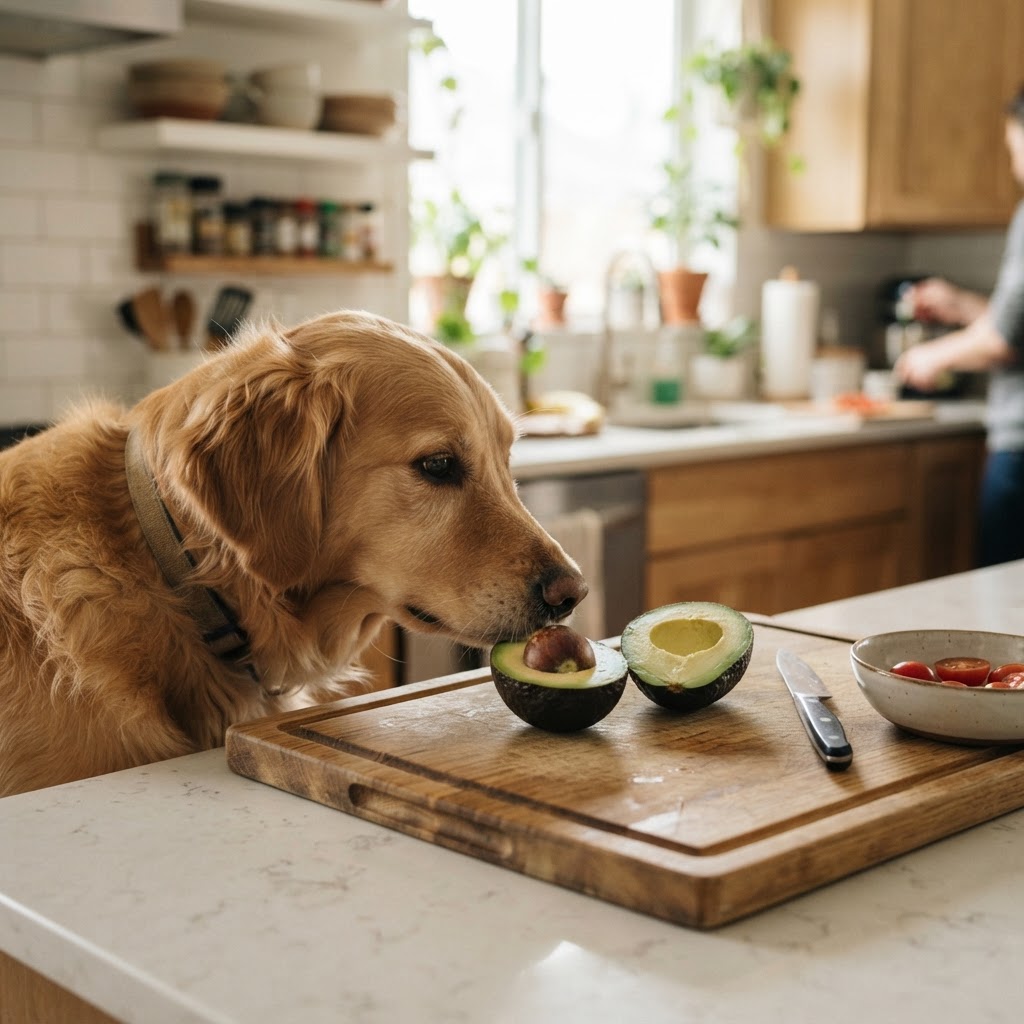
The skin and leaves of the avocado contain higher concentrations of persin than the flesh. If your dog eats the skin, they are more likely to experience gastrointestinal symptoms. Contact your vet for advice.
The Pit (High Risk - But Not for Persin)
The pit is the most dangerous part for dogs, not because of persin but because of its size. Avocado pits are large enough to cause:
- Choking: The pit can block the airway
- Intestinal obstruction: If swallowed, the pit can block the digestive tract
- Intestinal perforation: Sharp edges from a chewed pit can puncture the intestines
If your dog has swallowed an avocado pit whole or in large pieces, this is a medical emergency. The pit can cause a life-threatening blockage. Contact your vet immediately.
Symptoms of Avocado Ingestion
If your dog has eaten avocado flesh, watch for:
- Vomiting
- Diarrhoea
- Loss of appetite
- Lethargy
- Abdominal discomfort
If your dog has eaten the pit, watch for:
- Choking or gagging
- Repeated vomiting
- Loss of appetite
- Abdominal pain or swelling
- Constipation or straining without producing stool
- Lethargy
What to Do If Your Dog Eats Avocado
If Your Dog Ate the Flesh Only
If your dog ate a small amount of avocado flesh, monitor them for gastrointestinal upset. Most dogs tolerate small amounts without issue. Ensure they have access to fresh water and contact your vet if vomiting or diarrhoea develops.
If Your Dog Ate the Skin
Contact your vet for advice. The higher persin content in the skin may cause more significant symptoms, and your vet can advise whether to monitor at home or come in for evaluation.
If Your Dog Ate the Pit
This is potentially an emergency. Call your vet immediately. Do not induce vomiting unless instructed to do so by a vet, as the pit may become lodged in the oesophagus on the way back up.
Do not induce vomiting if your dog has eaten a large avocado pit. If the pit is already in the stomach, bringing it back up could cause it to become lodged in the oesophagus or airway. Always call your vet first.
Is Avocado Safe for Dogs?
While a small amount of avocado flesh is unlikely to harm most dogs, avocado is not recommended as a treat. The high fat content can contribute to weight gain and pancreatitis, and there is always the risk that your dog will eat the pit or skin along with the flesh. There are many safer, healthier treat options available.
If you do choose to share a small amount of avocado with your dog, ensure it is thoroughly peeled, pitted, and given in very small quantities as an occasional treat only.
Preventing Avocado Ingestion
Keep avocados stored out of your dog's reach and dispose of pits and skins in a secure bin that your dog cannot access. Be particularly cautious during food preparation, as dogs may grab dropped items quickly. If you grow avocado trees in your garden, ensure your dog does not have access to fallen fruit.
Frequently Asked Questions
Disclaimer: This article is for educational purposes only and is not a substitute for professional veterinary advice. If you're concerned about your pet's health, use our AI triage assessment or consult a licensed veterinarian.