Bottom line: Small amounts of pool water are generally harmless, but high concentrations of chlorine can cause mild gastrointestinal upset. Monitor your dog for vomiting or lethargy, and provide plenty of fresh, clean water.
| Situation | Suggested action |
|---|---|
| Significant lethargy or vomiting | Contact your vet |
| Mild stomach upset | Withhold food, provide water |
| Only a few sips | Monitor closely |
| Healthy, normal behavior | No action needed |
Is Pool Water Safe for Dogs?
Most dogs who drink a small amount of pool water will be perfectly fine. Properly maintained swimming pools contain chlorine and other chemicals at levels that are generally safe in small quantities. However, drinking larger amounts or drinking from a pool with imbalanced chemicals can cause problems.
The main concerns with pool water are:
- Chlorine and chemical irritants: Can cause gastrointestinal upset
- Algaecides and pool shock treatments: Higher chemical concentrations immediately after treatment
- Salt water pools: Contain high salt levels that can cause salt toxicity
- Bacteria and algae: In poorly maintained pools
How Much Pool Water Is Too Much?
Small Amounts (A Few Gulps)
If your dog took a few gulps while swimming or playing in the pool, they will most likely be fine. The chlorine concentration in a well-maintained pool is similar to tap water and should not cause issues in small amounts.
Larger Amounts (Significant Drinking)
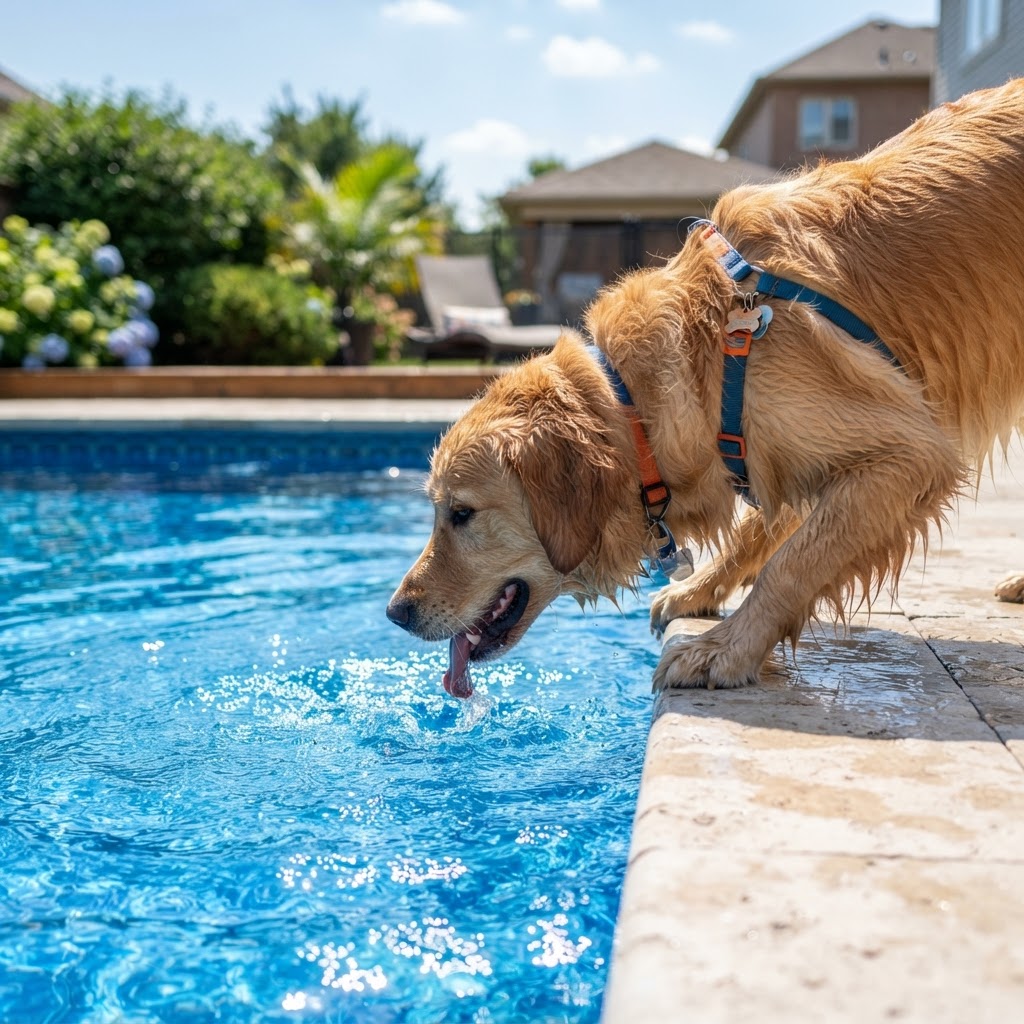
If your dog drank a significant amount of pool water, they may experience:
- Mild nausea
- Vomiting
- Diarrhoea
- Excessive drooling
- Mild abdominal discomfort
These symptoms are typically caused by the chlorine and other chemicals irritating the stomach lining. They usually resolve within 24 hours.
Recently Treated Pools
If your dog drank from a pool that was recently treated with chlorine shock, algaecide, or pH balancers, the chemical concentrations may be much higher. This is more concerning and warrants closer monitoring or a call to your vet.
If your dog has consumed pool water from a recently shocked or heavily treated pool and is showing symptoms such as repeated vomiting, lethargy, or difficulty breathing, contact your vet immediately.
Symptoms to Watch For
After drinking pool water, monitor your dog for the following:
Mild Symptoms (Usually Self-Resolving)
- Occasional vomiting (1-2 episodes)
- Loose stool
- Excessive thirst
- Drooling
- Mild lethargy
Concerning Symptoms (Contact Your Vet)
- Repeated or persistent vomiting
- Diarrhoea lasting more than 24 hours
- Significant lethargy or weakness
- Loss of appetite lasting more than 24 hours
- Difficulty breathing
- Pale gums
- Abdominal pain or bloating
- Excessive drooling
Salt Water Pools: An Additional Risk
If your pool is a salt water pool, the salt concentration is much higher than a standard chlorinated pool. While the salt is converted to chlorine through a generator, the water itself still contains elevated salt levels.
Drinking large amounts of salt water can cause salt toxicity (hypernatraemia) in dogs. Symptoms include:
- Extreme thirst
- Vomiting
- Diarrhoea
- Lethargy
- Muscle tremors
- Seizures in severe cases
Salt toxicity is a serious condition. If your dog has drunk a large amount of salt pool water and shows signs of tremors, seizures, or extreme lethargy, seek emergency veterinary care immediately.
What to Do If Your Dog Drinks Pool Water
Step 1: Remove Access
Move your dog away from the pool and provide fresh, clean drinking water.
Step 2: Provide Fresh Water
Encourage your dog to drink fresh water to dilute any chemicals they may have ingested. Do not force them to drink, but make fresh water readily available.
Step 3: Monitor for Symptoms
Watch for vomiting, diarrhoea, lethargy, or other concerning signs over the next 12-24 hours.
Step 4: Contact Your Vet If Concerned
If your dog has drunk a large amount, drunk from a recently treated pool, or is showing persistent or concerning symptoms, contact your vet for advice.
Preventing Pool Water Consumption
- Provide plenty of fresh water near the pool so your dog has an alternative
- Take regular breaks from swimming to offer fresh water
- Do not allow your dog to drink from the pool by supervising them closely
- Keep your dog out of the pool for at least 24 hours after chemical treatments
- Consider a pool cover when the pool is not in use
- Rinse your dog with fresh water after swimming to remove chlorine from their coat and prevent them from ingesting it during grooming
When Pool Chemicals Are Stored
A separate but important concern is your dog accessing concentrated pool chemicals. Chlorine tablets, granules, and liquid chlorine are far more dangerous than diluted pool water. If your dog has ingested concentrated pool chemicals, this is a medical emergency - contact your vet or pet poison helpline immediately.
Frequently Asked Questions
Disclaimer: This article is for educational purposes only and is not a substitute for professional veterinary advice. If you're concerned about your pet's health, use our AI triage assessment or consult a licensed veterinarian.