Bottom line: A swallowed battery is a life-threatening emergency due to chemical burns and potential heavy metal poisoning. You must treat this as a top-priority emergency and get to a vet clinic immediately.
| Situation | Suggested action |
|---|---|
| Battery was ingested | Immediate emergency clinic |
| Mouth burns visible | Immediate emergency clinic |
| Suspected ingestion time unknown | Immediate emergency clinic |
| Battery in mouth but not swallowed | Immediate emergency clinic |
The Silent Danger in Every Drawer
Batteries are everywhere - remote controls, hearing aids, watches, toys, key fobs, scales, and a thousand other household items. They're so common we barely think about them.
But when a dog chews or swallows a battery, the consequences can be severe - and the damage can begin within hours, not days. Battery ingestion is a genuine emergency, and the type of battery matters enormously.
Why Batteries Are Dangerous
Batteries pose three distinct dangers when chewed or swallowed:
1. Chemical burns
Most batteries contain corrosive materials - typically potassium hydroxide (alkaline) or sulphuric acid. When a battery is punctured, these chemicals leak directly onto the mouth, throat, oesophagus, or stomach lining. The result is a severe chemical burn that can cause tissue necrosis, ulceration, and perforation. Burns to the oesophagus are particularly dangerous because scar tissue can cause strictures - narrowing that makes swallowing permanently difficult.
2. Heavy metal toxicity
Some batteries contain heavy metals. The most concerning is zinc (in zinc-carbon and zinc-air batteries, including some hearing aid batteries). Zinc toxicity causes severe gastrointestinal signs, lethargy, and can lead to haemolytic anaemia (destruction of red blood cells).
3. Physical obstruction or perforation
A whole battery can become lodged in the digestive tract - most commonly at the oesophageal sphincter (where the oesophagus meets the stomach). A lodged battery can cause pressure necrosis (the tissue dies from constant pressure), leading to perforation of the oesophagus, stomach, or intestine. This causes mediastinitis or peritonitis - life-threatening infections.
Which Batteries Are Most Dangerous?
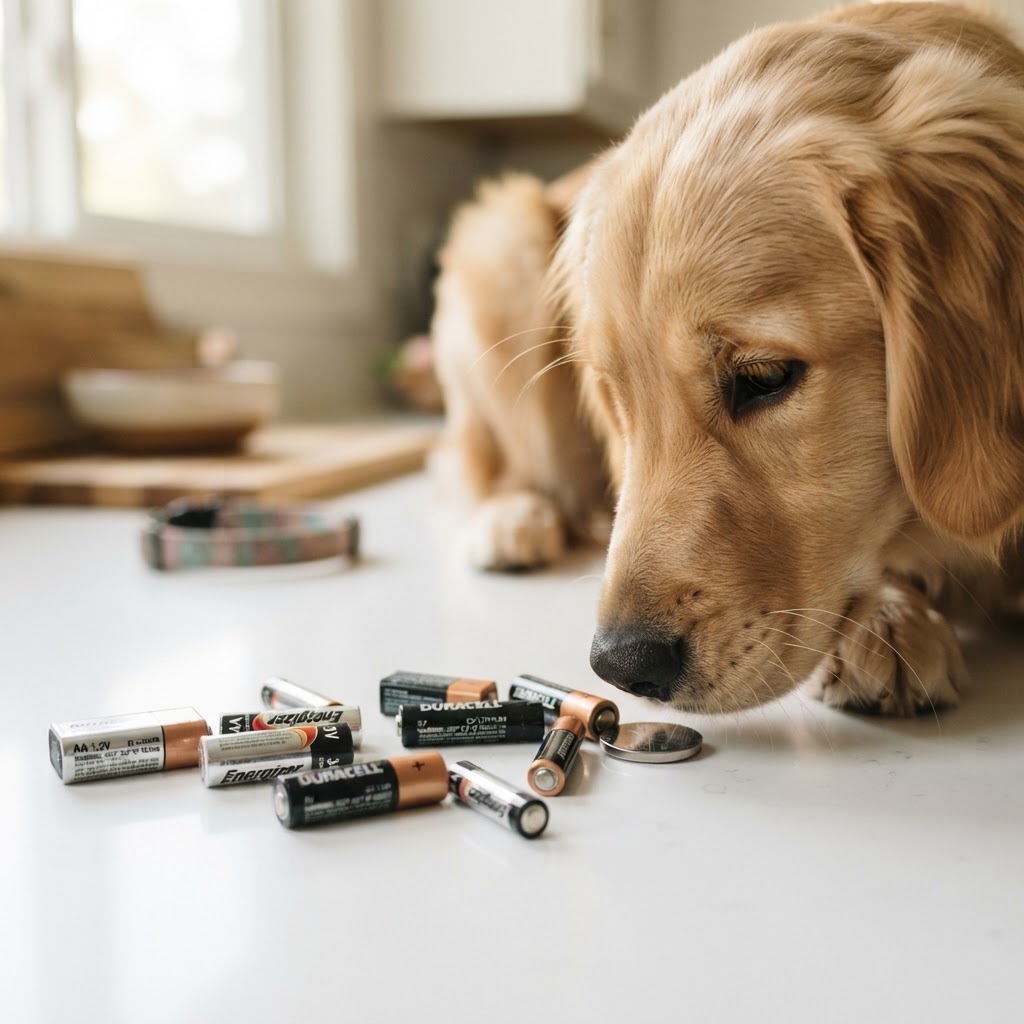
All batteries are potentially dangerous, but some are particularly concerning:
- 🐾 Button batteries (coin batteries) - used in hearing aids, watches, key fobs, and small electronics. These are the most commonly swallowed type and are especially dangerous because they can lodge in the oesophagus, where they can cause severe, rapid burns - sometimes within just 2 hours of contact
- Alkaline batteries (AA, AAA, C, D) - contain potassium hydroxide, which causes chemical burns when punctured
- Lithium batteries - found in many rechargeable devices. These are particularly dangerous if swallowed whole - they can generate an electrical current against the tissue lining, causing rapid, deep burns even without leaking
- Zinc-air batteries - commonly used in hearing aids, can cause zinc toxicity
Symptoms of Battery Ingestion
If your dog has chewed or swallowed a battery, symptoms may include:
- 🐾 Drooling and pawing at the mouth - a sign of oral burns
- Vomiting (may contain blood or black, coffee-ground material)
- Loss of appetite
- Abdominal pain - hunched posture, reluctance to move
- Lethargy
- Difficulty swallowing - gagging or reluctance to eat
- Bad breath - a metallic or chemical smell
- Black or dark stools - a sign of gastrointestinal bleeding
- Fever
Button battery ingestion is particularly urgent. If a button battery lodges in the oesophagus, severe burns can develop within 2 hours, and perforation can occur within 4–6 hours.
What to Do If Your Dog Eats a Battery
Step 1: Call your vet or an emergency clinic immediately. This is a true emergency - do not wait for symptoms.
Step 2: Gather the information:
- What type of battery was it? (button, AA, lithium, etc.)
- Was it whole or chewed?
- How many batteries?
- When did it happen?
- Your dog's weight
Step 3: Do not induce vomiting. A battery that comes back up can cause additional burns to the oesophagus, or could become lodged.
Step 4: Do not give food or water - if your dog needs anaesthesia for endoscopic removal, they need an empty stomach.
Step 5: Get to the vet immediately.
What the Vet Will Do
- Examination - especially the mouth and throat for burns
- X-rays - to locate the battery and determine if it's whole or punctured, and where it is in the digestive tract
- Endoscopic removal - if the battery is in the stomach or oesophagus, a vet with an endoscope can often retrieve it without surgery
- Surgical removal - if the battery is in the intestines or has caused perforation, surgery is required
- Treatment for burns - pain relief, gastrointestinal protectants, and antibiotics if there's infection or perforation
- Blood tests - to monitor for heavy metal toxicity, especially with zinc-containing batteries
- Hospitalisation - for monitoring and supportive care, sometimes for several days
What NOT to Do
- ❌ Do not induce vomiting - the battery can cause more damage coming back up
- ❌ Do not give food or water - your dog may need anaesthesia
- ❌ Do not wait to see if "it passes" - the longer a battery sits in the digestive tract, the more damage it does
- ❌ Do not assume a chewed battery is less dangerous than a whole one - a punctured battery releases corrosive chemicals directly onto tissue
Prevention
- Keep all batteries out of reach - in closed containers, in high cupboards
- Store hearing aids and their batteries safely - they're small, shiny, and very attractive to dogs
- Don't leave remote controls, key fobs, or toys within reach - dogs love to chew them, and the batteries inside are the real danger
- Dispose of used batteries properly - dogs will chew on batteries from the bin
- Be extra vigilant with small dogs and puppies - they're more likely to encounter button batteries (hearing aids, watches) and the small batteries are more likely to lodge
The Bottom Line
Battery ingestion is a true veterinary emergency. Don't wait for symptoms, don't try to manage it at home, and don't assume the battery will pass. Call your vet immediately and follow their advice. The faster a battery is located and removed, the less damage it can do.
Frequently Asked Questions
Disclaimer: This article is for educational purposes only and is not a substitute for professional veterinary advice. If you're concerned about your pet's health, use our AI triage assessment or consult a licensed veterinarian.