Bottom line: Rat poison is a medical emergency that can lead to delayed internal bleeding, which is often fatal if not treated immediately. Even if your dog appears healthy, you must seek veterinary care right away with the packaging if possible.
| Situation | Suggested action |
|---|---|
| Any suspected ingestion | Immediate emergency vet visit |
| Bleeding gums or nose | Emergency vet visit |
| Lethargy or weakness | Emergency vet visit |
| Just found empty packaging | Call vet immediately |
Understanding Rat Poison Toxicity in Dogs
Rat poison (rodenticide) is one of the most common and dangerous toxins dogs encounter. The most widely used type contains anticoagulants that prevent blood from clotting, causing internal bleeding that can be fatal if left untreated.
The insidious nature of these poisons is that symptoms often do not appear for 2 to 5 days after ingestion. By the time signs are visible, significant internal bleeding may have already occurred.
Types of Rat Poison
Anticoagulant Rodenticides (Most Common)
These prevent vitamin K-dependent clotting factors from forming. Without the ability to clot, your dog can bleed internally from even minor trauma. Common brands include warfarin, bromadiolone, and brodifacoum.
Bromethalin
This type causes swelling in the brain and spinal cord. Symptoms include tremors, seizures, and paralysis. There is no specific antidote, making it particularly dangerous.
Cholecalciferol (Vitamin D3)
This type causes dangerously high calcium levels, leading to kidney failure and mineralisation of soft tissues.
If you know the brand or type of rat poison, bring the packaging to the vet. Different types require completely different treatments.
Warning Signs
For anticoagulant poisons, symptoms typically appear 2-5 days after ingestion:
- Lethargy and weakness
- Pale gums
- Bleeding from the nose, gums, or small cuts that will not stop
- Blood in urine, stool, or vomit
- Bruising on the skin or gums
- Difficulty breathing (if bleeding into the chest)
- Swollen or painful abdomen (if bleeding internally)
- Coughing
For bromethalin-based poisons, symptoms may include:
- Muscle tremors
- Seizures
- Weakness in the hind legs
- Paralysis
What to Do Immediately
Step 1: Gather Information
Find the packaging. Note the active ingredient, brand name, and concentration. Estimate how much was eaten and when.
Step 2: Call Your Vet or Pet Poison Helpline
Call immediately, even if your dog seems perfectly fine. Because symptoms are delayed, waiting until signs appear means treatment will be more difficult and less effective.
Do not induce vomiting unless instructed by a vet. Some rat poisons can cause more damage coming back up.
Step 3: Bring the Packaging
Bring the rat poison container with you to the vet. This is the single most helpful thing you can do - it tells the vet exactly what they are dealing with.
How Vets Treat Rodenticide Poisoning
Treatment depends on the type of poison:
For Anticoagulant Types
- Induced vomiting if ingestion was within 1-2 hours
- Activated charcoal to prevent further absorption
- Vitamin K1 therapy for 2-4 weeks to restore clotting ability
- Blood tests to check clotting times before and after treatment
- Blood transfusion if significant bleeding has already occurred
For Bromethalin Types
- Induced vomiting and activated charcoal
- Intravenous fluids and medications to reduce brain swelling
- Anti-seizure medications if needed
For Cholecalciferol Types
- Induced vomiting and activated charcoal
- Medications to lower calcium levels
- Intravenous fluids to protect the kidneys
Why Early Treatment Matters
If treatment begins within the first 1-2 hours, the vet can induce vomiting and administer activated charcoal before the poison is absorbed. This is relatively straightforward and highly effective.
If treatment is delayed until symptoms appear, your dog may need blood transfusions, extended hospitalisation, and weeks of medication. The prognosis is significantly worse once bleeding has begun.
Prevention
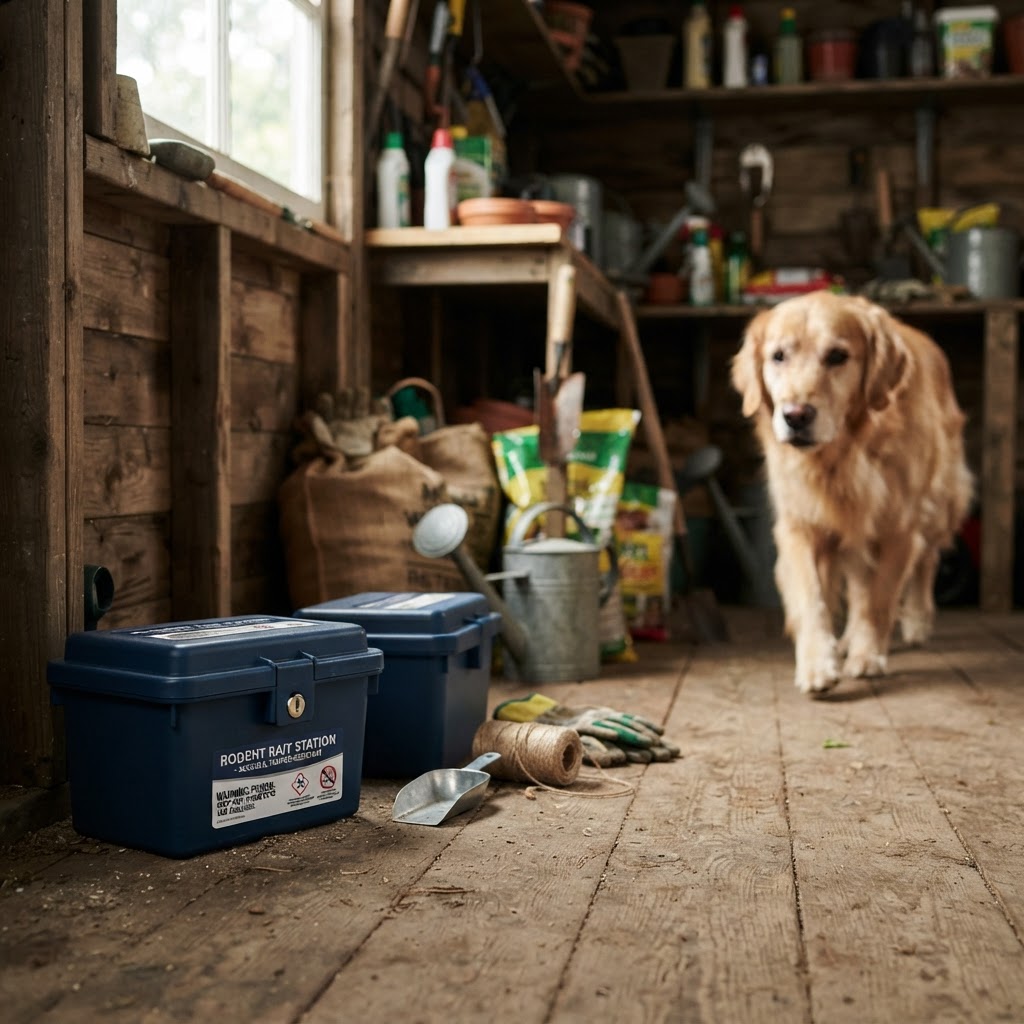
Store rat poison in sealed containers in locked cabinets. Never place poison in areas accessible to pets. If you must use rodenticides outdoors, use tamper-proof bait stations that dogs cannot open.
Frequently Asked Questions
Disclaimer: This article is for educational purposes only and is not a substitute for professional veterinary advice. If you're concerned about your pet's health, use our AI triage assessment or consult a licensed veterinarian.