Bottom line: Occasional vomiting after eating something new is often mild, but repeated episodes require medical attention. Urgency increases if your dog is a puppy, a senior, or shows lethargy, blood in vomit, or abdominal pain.
| Situation | Suggested action |
|---|---|
| Multiple vomiting episodes with blood | Immediate vet visit |
| Lethargic or non-responsive | Immediate vet visit |
| Repeated vomiting over 24 hours | Same-day vet appointment |
| Single instance with normal energy | Monitor closely at home |
Not All Vomiting Is Created Equal
Every dog owner has been there. Your dog makes that unmistakable sound - the retch, the heave, the splat - and you're reaching for paper towels while wondering, "Is this normal, or should I be worried?"
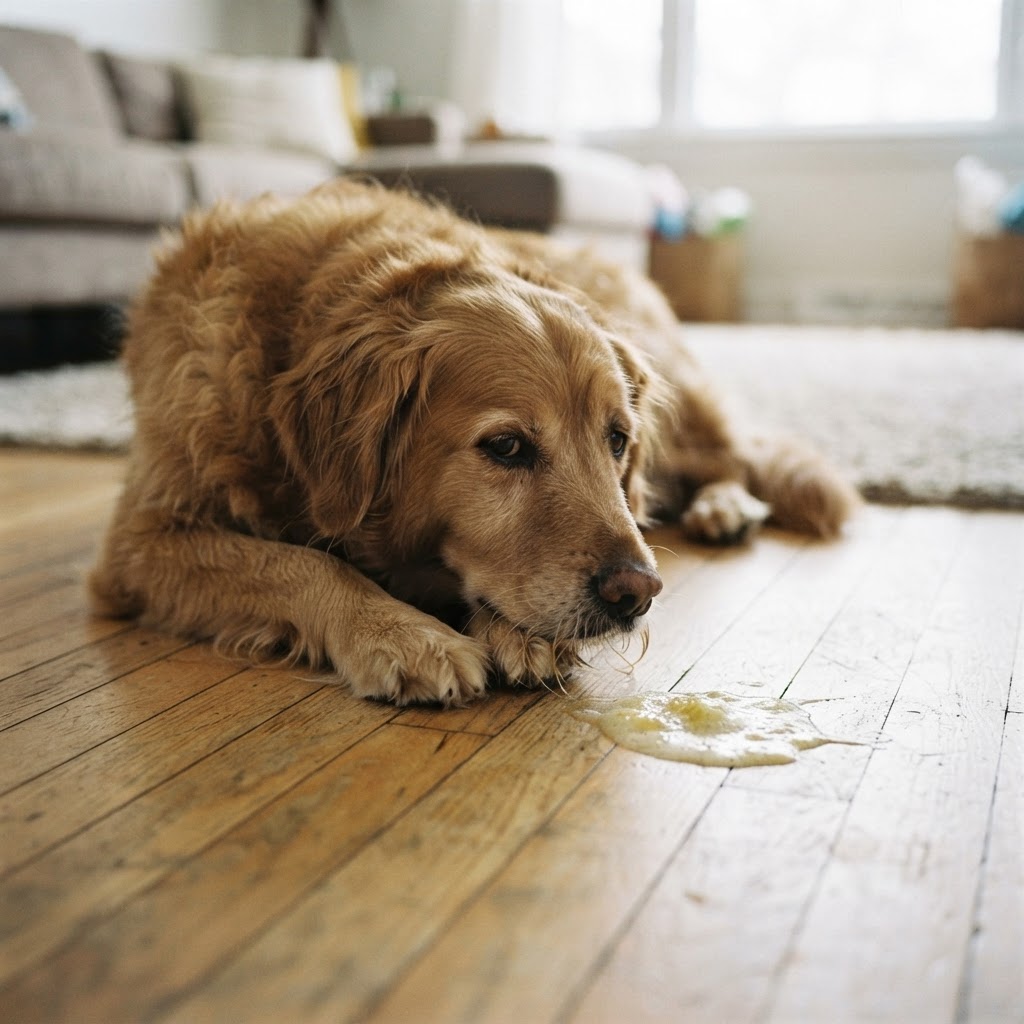
The truth is, dogs vomit more readily than humans do. Sometimes it's nothing - they ate too fast, ate grass, or their stomach is empty and producing excess bile. But sometimes it's the first sign of something serious.
The key is knowing how to tell the difference - and knowing when a single "sick" moment is fine, and when a pattern is forming that needs veterinary attention.
First: Vomiting vs. Regurgitation
These are two very different things, and distinguishing between them helps your vet enormously.
Vomiting is an active process. Your dog will show signs beforehand - drooling, restlessness, lip-licking, retching, and abdominal contractions. The material that comes up may be partially digested food, bile, or liquid, and usually has a sour smell.
Regurgitation is passive. Food comes back up with no effort, often in a tube shape (matching the oesophagus), usually shortly after eating. It looks undigested. This is more common in certain breeds and may indicate an oesophageal problem - but it's a different issue from vomiting.
Common (and Usually Harmless) Reasons Dogs Vomit
Not every episode of vomiting is cause for alarm. Here are some common, relatively benign causes:
Eating too fast: Dogs who inhale their food may vomit it back up within minutes. The solution? A slow-feeder bowl.
Eating grass: While the old myth says dogs eat grass when they're sick, research suggests most dogs simply enjoy it. Occasional grass-eating with a bit of vomiting afterward is usually fine.
Motion sickness: Common in puppies (many outgrow it). Signs include drooling, restlessness, and vomiting during car rides.
Bilious vomiting syndrome: If your dog vomits yellow or greenish fluid first thing in the morning, before eating, they may have an empty stomach producing excess bile. This is usually resolved by feeding a small meal just before bedtime.
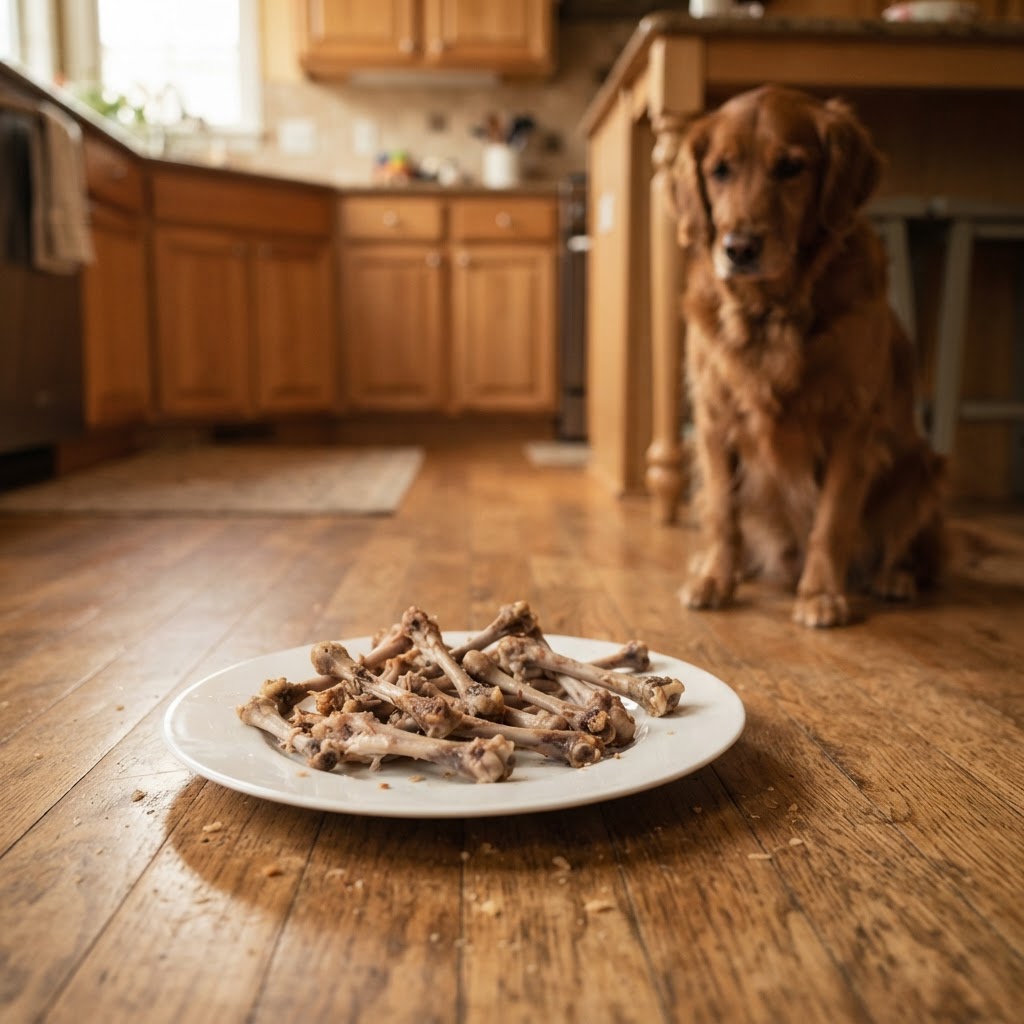
Dietary indiscretion: The classic "dog ate something they shouldn't have" - a bit of rubbish on a walk, a treat from the table, or something scavenged. A single episode is usually fine; repeated vomiting is not.
When Vomiting Becomes a Concern
The general rule: one episode of vomiting in an otherwise well dog is usually not an emergency. Repeated vomiting is.
Here's when you should be picking up the phone to your vet:
Call your vet if:
- Your dog has vomited 3 or more times in 8 hours, or 5 or more times in 24 hours
- The vomiting is projectile (this can indicate a blockage)
- There is blood in the vomit - either bright red streaks, or dark material that looks like coffee grounds (this is digested blood and is always significant)
- Your dog is also has diarrhoea - the combination causes rapid dehydration
- Your dog is lethargic, weak, or collapsed
- Your dog has a swollen or painful abdomen
- Your dog is unable to keep water down
- The vomit has a particularly foul or unusual smell
- Your dog is a puppy, a senior, or has an existing health condition - these dogs dehydrate faster and have less reserve
The "Coffee Grounds" Sign
If your dog's vomit contains material that looks like dark coffee grounds, this is digested blood. It can indicate:
- Gastric ulcers
- A foreign body that has irritated or perforated the stomach lining
- Gastric bleeding from a toxin (such as NSAIDs or rat bait)
- Severe gastritis or inflammation of the stomach
This is always a reason to see a vet - even if your dog seems otherwise well. Internal bleeding can be slow and silent.
The "Blockage" Pattern
One of the most worrying causes of persistent vomiting is an intestinal blockage - often from swallowing something they shouldn't have (socks, toys, corn cobs, stones).
The blockage pattern looks like this:
- Your dog vomits food shortly after eating
- Then vomits bile or liquid even when not eating
- They become progressively more lethargic
- They stop eating and drinking
- Their abdomen may become swollen or painful
- Diarrhoea may be absent - or there may be nothing produced at all
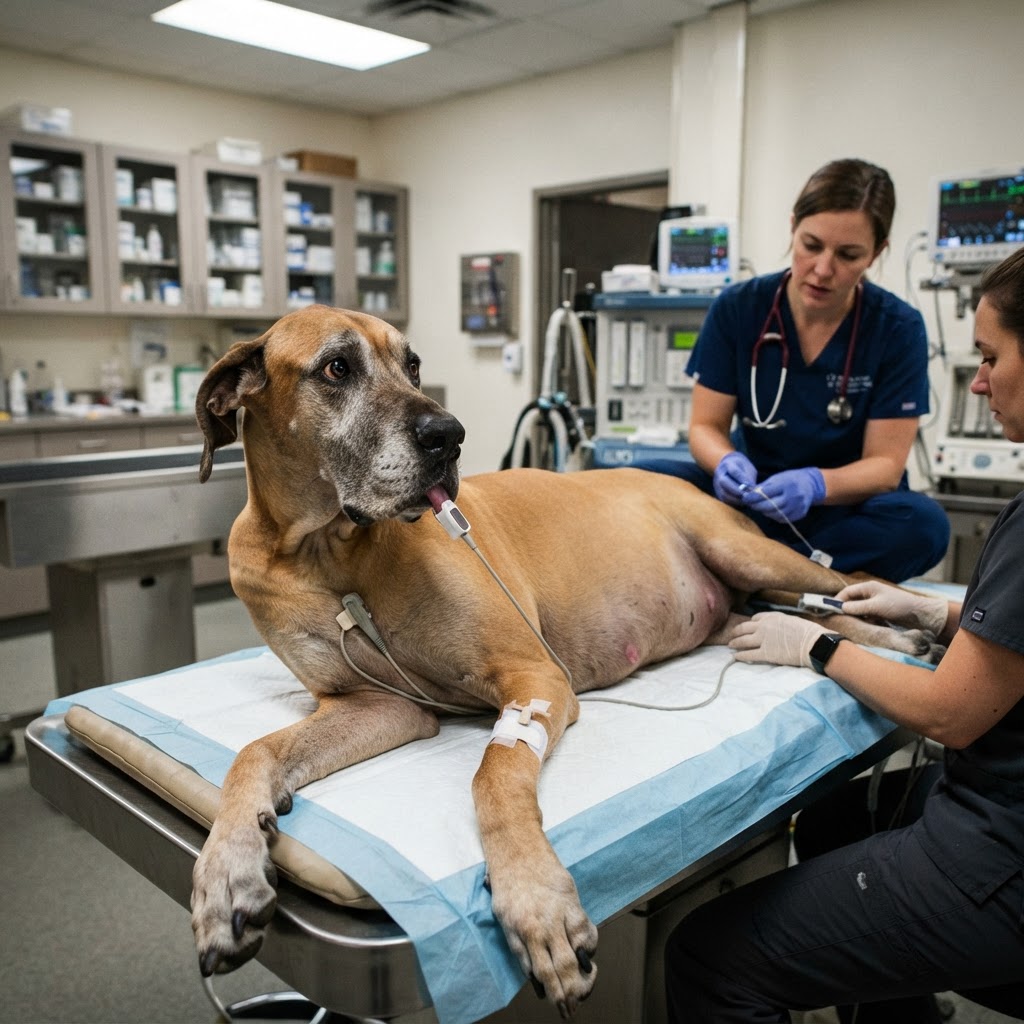
Deep-chested breeds (Great Danes, German Shepherds) with unproductive retching and a swollen belly may have bloat (GDV) - a life-threatening emergency. Go to the vet immediately.
What to Do While You Wait
If your dog has vomited once or twice and seems otherwise well, you can try the following at home while monitoring closely:
- Withhold food for 4–6 hours to let the stomach settle
- Offer small amounts of water frequently - don't let them gulp a whole bowl
- After the fasting period, offer a small amount of bland food - boiled chicken and white rice in a 1:3 ratio
- If they keep this down, offer small meals every few hours for a day or two before gradually transitioning back to their normal diet
- If they vomit again, stop feeding and call your vet.
What NOT to Do
- ❌ Do not give human medications - paracetamol, ibuprofen, and aspirin can be toxic to dogs and may make the underlying problem worse
- ❌ Do not force your dog to drink - if they're vomiting, they'll just bring it back up
- ❌ Do not try to induce vomiting without veterinary instruction - if the vomiting is caused by a toxin or foreign body, bringing more up could cause additional damage
- ❌ Do not feed a large meal immediately after a vomiting episode - the stomach needs time to recover
The Bottom Line
One vomit? Probably fine. Three or more? Call your vet. Blood, lethargy, or a swollen belly? Go immediately. The single most important thing you can do is pay attention to the pattern - how many times, how often, what it looks like, and how your dog is behaving between episodes. That information is gold to a vet, and it could save your dog's life.
Frequently Asked Questions
Disclaimer: This article is for educational purposes only and is not a substitute for professional veterinary advice. If you're concerned about your pet's health, use our AI triage assessment or consult a licensed veterinarian.